
Introduction
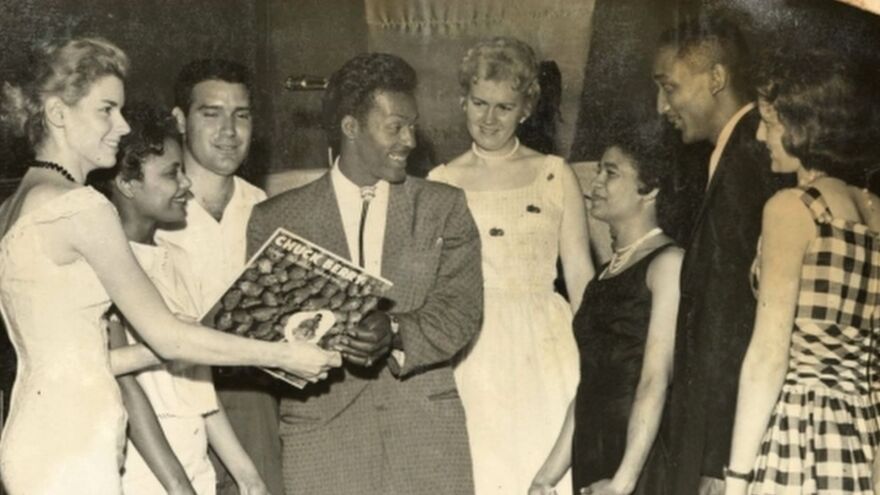
The Mann Act case involving Chuck Berry remains one of the most controversial and complex chapters in the history of early rock and roll. At the height of his fame in the late 1950s, Berry was not only a pioneering musician but also a cultural icon whose influence was rapidly spreading across the United States and beyond. However, his rising career was suddenly interrupted by a legal battle that would alter both his personal life and public image.
In 1959, Berry encountered a 14-year-old girl named Janice Escalanti, who was of Mexican descent. He brought her from Texas to St. Louis, Missouri, where he intended for her to work at his nightclub. According to Berry, the arrangement was purely professional. However, events soon took a darker turn. After being dismissed from her job, the girl was later found to be involved in prostitution activities. This discovery led authorities to investigate Berry’s role in transporting her across state lines.
Berry was subsequently charged under the Mann Act, a federal law originally enacted in 1910 to combat human trafficking and immoral conduct involving women. The prosecution argued that Berry had violated the law by transporting a minor for immoral purposes. In 1960, he was convicted and sentenced to five years in prison along with a monetary fine.
However, the case quickly became controversial due to concerns about fairness and bias. During the trial, the presiding judge made remarks that were widely interpreted as racially prejudiced, which contributed to the decision to overturn the initial conviction. This moment highlighted the broader social tensions of the era, particularly regarding race and justice in the United States.
Despite the overturned ruling, Berry was retried and once again found guilty. He ultimately served approximately 20 months in prison between 1962 and 1963. The experience had a lasting impact on him, both personally and professionally. His time behind bars disrupted his momentum at a crucial point in his career, and upon his release, the music industry had begun to shift.
The Mann Act case significantly damaged Berry’s reputation. While he continued to perform and record music after his release, the scandal lingered in the public consciousness. For some, it overshadowed his groundbreaking contributions to music. For others, it became a symbol of the challenges faced by Black artists navigating fame in a deeply segregated society.
In retrospect, many historians and critics have revisited the case, questioning whether Berry received a fair trial. Some argue that racial bias and the social climate of the time played a significant role in how the case was handled and perceived. Regardless of interpretation, the incident remains a defining moment in Berry’s life.
Despite this troubled chapter, Chuck Berry is still widely celebrated as one of the founding fathers of rock and roll. His music continues to inspire generations, proving that even in the face of controversy, his artistic legacy endures.
Views: 1