
Introduction
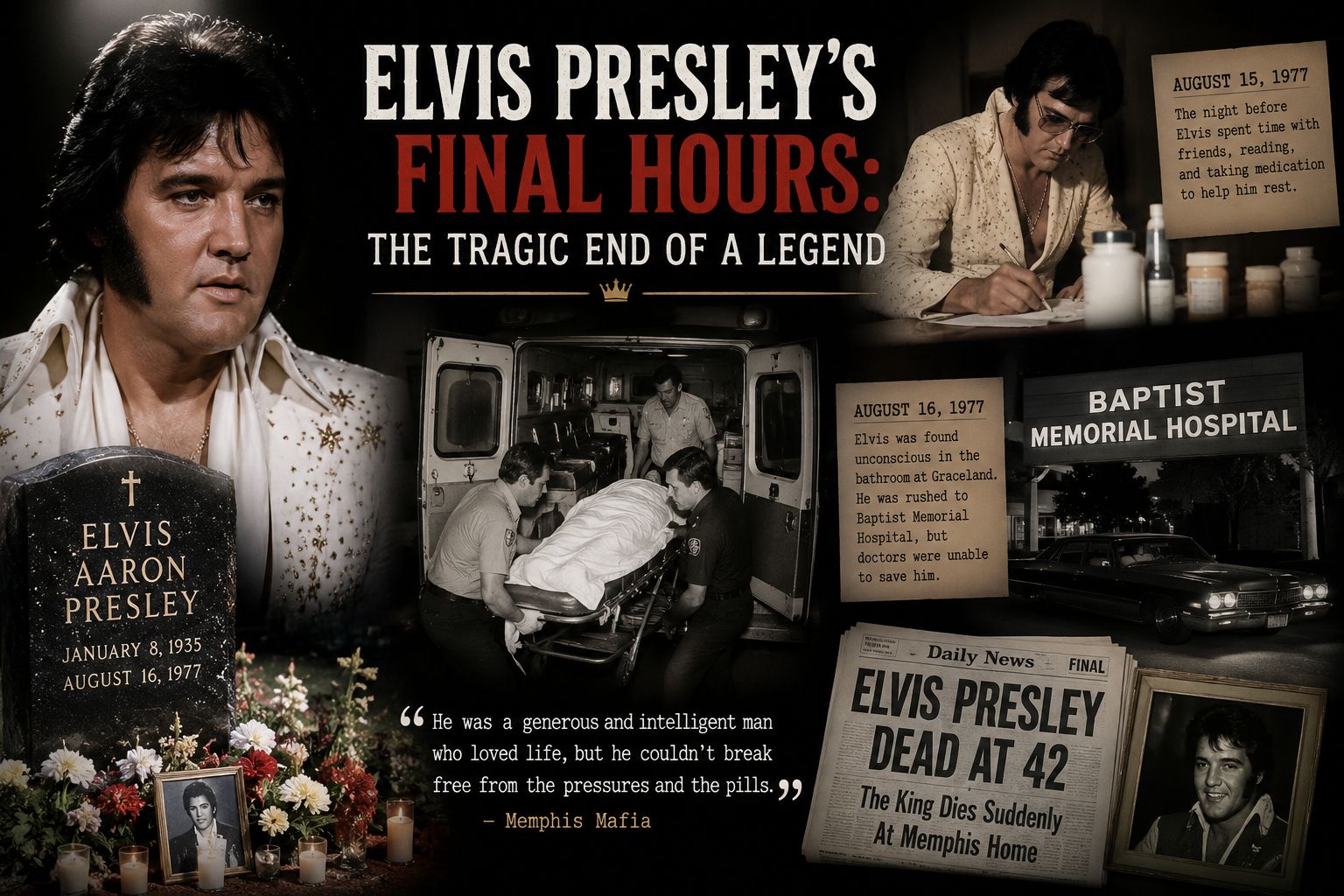
Elvis Presley, the King of Rock and Roll, remains one of the most influential entertainers in history. His music, charisma, and unforgettable stage presence changed popular culture forever. Yet behind the fame, wealth, and adoration of millions, Elvis struggled with personal challenges that would ultimately contribute to his tragic death on August 16, 1977.
In the days leading up to his death, Elvis was preparing for another concert tour despite suffering from declining health. According to members of his inner circle, known as the “Memphis Mafia,” he was physically exhausted, emotionally drained, and increasingly dependent on prescription medications. Although many people around him recognized the warning signs, few were able to convince him to change his lifestyle.
Throughout the 1970s, Elvis maintained a demanding touring schedule arranged by his manager, Colonel Tom Parker. The constant travel, performances, and pressure to remain successful took a heavy toll on him. Friends recalled that Elvis often complained about being tired, but he felt responsible for supporting the many people who depended on him financially. As a result, he continued performing even when his health was deteriorating.
Drug use became a major problem during the final years of his life. Unlike illegal street drugs, Elvis relied primarily on prescription medications supplied by doctors. He used sleeping pills, painkillers, tranquilizers, and stimulants to cope with his demanding lifestyle. Members of the Memphis Mafia admitted that they watched his dependence grow worse over time. Many feared that the medications were slowly destroying his health, but Elvis refused to believe they posed a serious danger.
His closest friends described him as a generous and intelligent man who loved life but struggled to break free from his habits. Some tried to intervene, encouraging him to rest and take time away from touring. However, Elvis often insisted that he could not stop because too many people depended on him. His loyalty to those around him became both one of his greatest strengths and one of his greatest weaknesses.
On the night of August 15, 1977, Elvis spent time with friends, played racquetball, listened to music, and talked about future plans. Although he appeared tired, nobody imagined that these would be his final hours. Early the next morning, after experiencing difficulty sleeping, he went into the bathroom with a book. Several hours later, his fiancée Ginger Alden became concerned when he did not return.
When friends rushed to the bathroom, they found Elvis collapsed on the floor. Emergency services were called immediately, and desperate attempts were made to revive him. He was transported to Baptist Memorial Hospital in Memphis, but doctors were unable to save him. Shortly afterward, Elvis Presley was officially pronounced dead at the age of 42.
The news devastated his family, friends, and millions of fans worldwide. Members of the Memphis Mafia recalled their shock, grief, and disbelief. Many struggled to accept that the man they considered larger than life was gone. Some blamed the doctors who supplied him with medication, while others blamed the pressures of fame. Yet many also acknowledged that Elvis himself understood the risks but was unable to change course.
Nearly fifty years later, Elvis Presley’s legacy remains stronger than ever. His music continues to inspire generations, and his influence on popular culture is undeniable. While his death was tragic, his extraordinary talent, generosity, and lasting impact ensure that the King of Rock and Roll will never be forgotten.