
Introduction
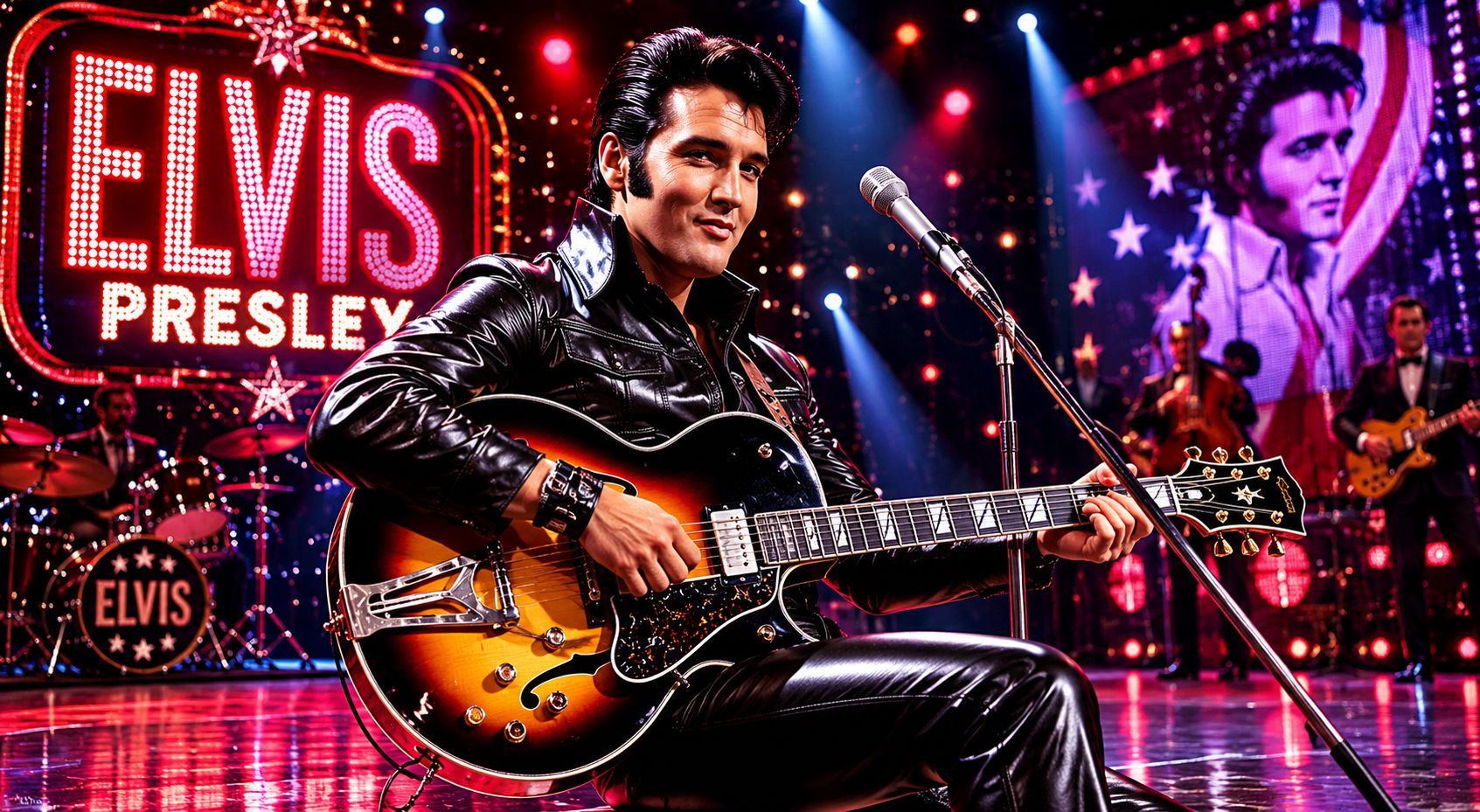
When people think of Elvis Presley, they often picture a charismatic young man with slicked-back hair, a powerful voice, and an unforgettable stage presence. But in the 1950s, Elvis was more than just a singer—he was a cultural revolution. His performances were so bold, energetic, and different that they shocked millions of Americans and sparked one of the biggest controversies in entertainment history.
Today, Elvis is celebrated as the “King of Rock and Roll.” However, there was a time when many parents, religious leaders, and television executives believed he was a dangerous influence on young people. The reason? His performances were considered far too provocative for the conservative society of the era.
In the mid-1950s, American popular culture was undergoing major changes. Young people were looking for new forms of expression, while older generations preferred traditional values and music styles. Into this environment stepped Elvis Presley, bringing a fresh combination of rock and roll, rhythm and blues, country music, and unmatched stage energy.
What truly set Elvis apart was the way he moved. During concerts, he would shake his hips, swing his legs, and move his entire body to the rhythm of the music. These movements may seem harmless by modern standards, but in the 1950s they were viewed as shocking and even scandalous. Newspapers criticized him. Religious groups condemned him. Parents worried that he was corrupting the nation’s youth.
The controversy reached new heights when Elvis appeared on national television. Millions of viewers watched his performances, and reactions were intense. Some audiences loved his energy and confidence, while others were horrified. Critics claimed that his dancing was inappropriate and overly suggestive. One newspaper famously described his movements as creating a “frenzy” among teenage fans.
As Elvis became more popular, television producers faced increasing pressure. During one of his most famous appearances on national TV, camera operators were instructed to film him only from the waist up. Producers hoped this would prevent viewers from seeing the hip movements that had become the center of public controversy. Ironically, the attempt to censor Elvis only made him more famous. People became even more curious about the young performer everyone was talking about.
Teenagers, meanwhile, could not get enough of him. His concerts were often filled with screaming fans who reacted with excitement whenever he stepped onto the stage. For many young people, Elvis represented freedom, individuality, and rebellion against social expectations. He was not simply performing songs—he was creating a new identity for an entire generation.
The criticism continued for years. Some public figures argued that rock and roll itself was harmful, and Elvis became the face of those fears. Yet despite the backlash, his popularity kept growing. Record sales soared, concert venues sold out, and his influence spread across the world. Every attempt to suppress his performances seemed to increase public interest.
Looking back today, it is difficult to understand why Elvis caused such outrage. Modern performers routinely engage in far more daring stage productions. However, the significance of Elvis lies in the fact that he challenged the cultural norms of his time. His performances forced society to confront changing attitudes toward music, youth culture, and personal expression.
Many historians now view the controversy surrounding Elvis as a turning point in popular culture. His performances helped break down barriers between generations and opened the door for future artists to experiment with their image and stage presence. Without Elvis, the evolution of modern pop music might have looked very different.
Perhaps the most remarkable aspect of the story is that Elvis never set out to become a symbol of controversy. He simply performed with passion, confidence, and authenticity. Yet those qualities were powerful enough to shake an entire nation.
More than half a century later, the image of Elvis Presley moving across a stage remains one of the most iconic moments in music history. What was once considered scandalous is now recognized as groundbreaking. His controversial performances did not destroy his career—they built his legend.
And that is why Elvis Presley remains unforgettable: not because he followed the rules, but because he changed them forever.
Video