
Introduction
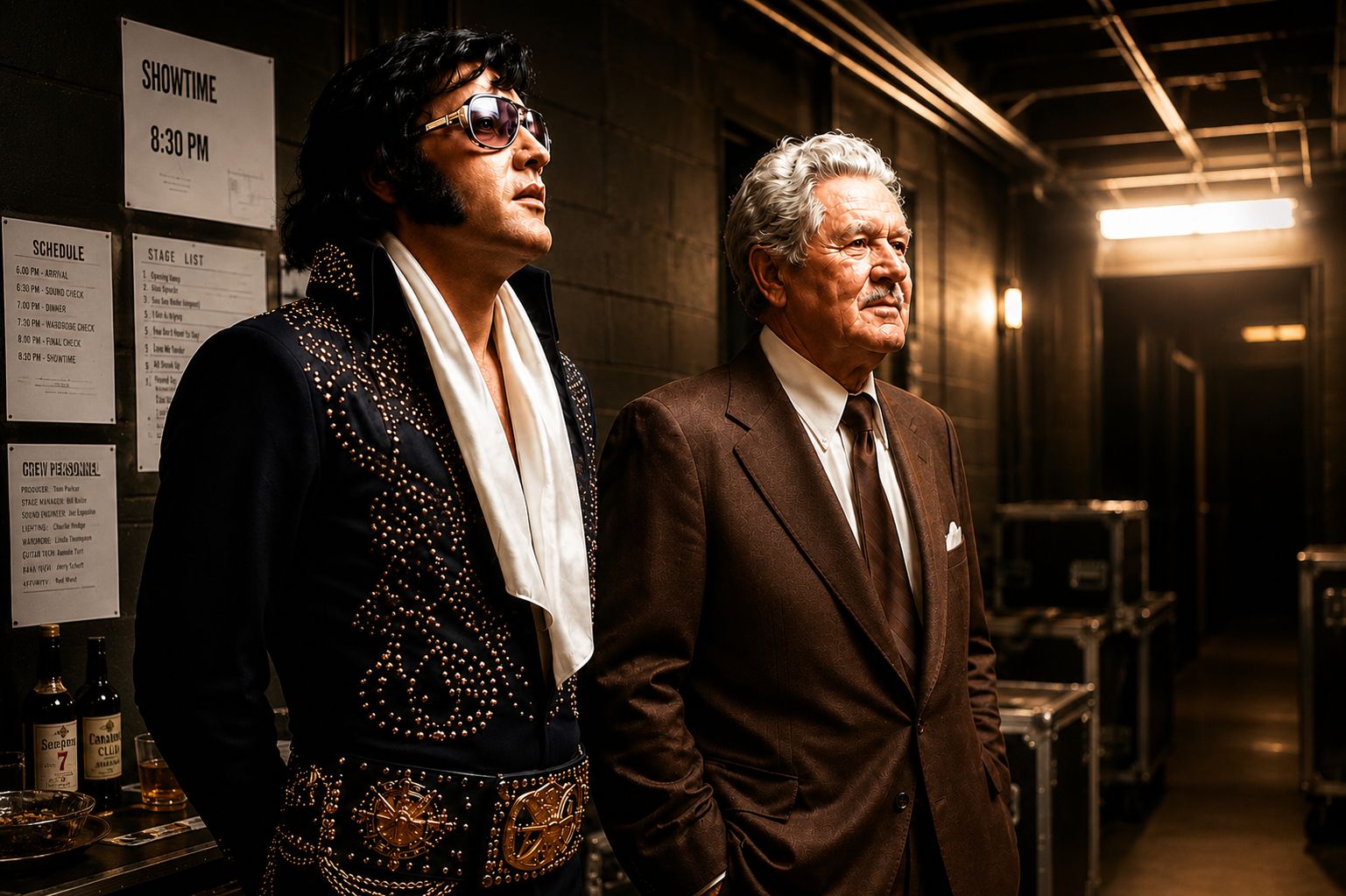
“He Gave Everything Until There Was Nothing Left”: The Shocking Hidden Story of Elvis Presley’s Final Years—Behind the Fame, Fortune, and Global Adoration Was a Lonely Battle Few Ever Witnessed, a Heartbreaking Decline Hidden From the Public Eye, and the Tragic Truth About the King of Rock and Roll’s Last Days That Fans Were Never Meant to See Until Now.
Elvis Presley’s final years remain one of the most heartbreaking chapters in American music history. To the world, he was still the King of Rock and Roll — the man whose voice changed popular music forever, whose image filled arenas, whose records shaped generations, and whose influence reached far beyond the stage. But behind the famous name was a human being carrying a weight that fame could not lift.
The tragedy of Elvis’s later life is not simply that he died young. It is that he seemed to give so much of himself to the world that, in the end, there was very little peace left for the man behind the legend. Audiences saw the glittering jumpsuits, the bright lights, the standing ovations, and the enormous devotion of fans. What they could not always see was the exhaustion, loneliness, physical strain, and emotional burden of living as a symbol rather than an ordinary person.
Elvis had been famous since he was barely more than a young man. From the beginning, the public wanted more from him: more songs, more films, more concerts, more appearances, more proof that the magic was still there. For a time, he seemed able to deliver all of it. His voice carried power, tenderness, gospel depth, and emotional fire. He could make a crowd scream with excitement, then quiet a room with a ballad sung from the heart.
But being adored by millions is not the same as being truly known. That is one of the painful truths at the center of Elvis Presley’s final years. The world loved the King, but the man himself often seemed trapped inside the expectations that came with that crown. Every performance became a demand. Every public appearance became a test. Every year made it harder to separate Elvis Presley the person from Elvis Presley the legend.
By the 1970s, Elvis was still capable of extraordinary musical moments. His voice could still rise with deep feeling, especially when he sang gospel, ballads, or songs filled with longing. Yet there was a visible sadness in parts of that era — a sense that the stage had become both his refuge and his burden. He belonged there, but it also seemed to cost him more each time.
For older listeners, this story carries a special emotional power because it speaks to the human cost of devotion. Many people spend their lives giving to others: to family, work, country, community, or art. Elvis gave himself to music and to the millions who loved him. But giving everything can become dangerous when there is no space left to heal.
The phrase “He Gave Everything Until There Was Nothing Left” feels painfully appropriate because it captures both his greatness and his sorrow. Elvis did not become a legend by holding back. He sang with his whole body, his whole heart, and his whole spirit. That intensity made him unforgettable. It also made his decline feel even more tragic.
The hidden story of his final days is not only about illness or exhaustion. It is about isolation. It is about a man surrounded by people but still deeply alone in ways the public could not understand. It is about the pressure to remain extraordinary when the body and spirit were asking for rest. It is about a performer who had given the world decades of music, yet still seemed unable to step away from the expectations placed upon him.
In the end, Elvis Presley’s final years should not be remembered only through sadness. They should also deepen our compassion. They remind us that legends are not invincible. They are people with fears, fatigue, memories, regrets, and needs that applause cannot meet. Elvis changed music forever, but he also paid a heavy price for becoming larger than life.
His voice remains. His songs still move people. His influence still echoes through every generation of performers who followed him. But behind the crown was a man who deserved more peace than he received. And perhaps the most honest way to honor Elvis now is not only to celebrate the King, but to remember the human being who gave so much of himself that the world is still listening.